How Quality Leather Motorcycle Gloves Are Made
·August 19, 2026
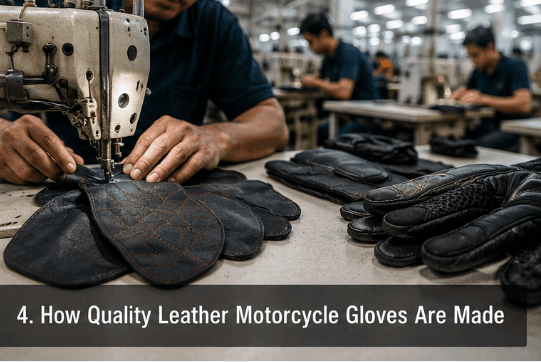
How Quality Leather Motorcycle Gloves Are Made
A quality motorcycle glove is the result of careful material selection, skilled craftsmanship, accurate production, and thorough quality control.
While a finished pair of leather motorcycle gloves may look simple, producing a comfortable and durable glove requires attention to detail at every stage of manufacturing.
For motorcycle glove brands, distributors, and buyers, understanding the manufacturing process can help them make better decisions when selecting a manufacturing partner.
1. Selecting the Right Leather
The manufacturing process begins with selecting suitable leather.
Leather must be chosen according to the intended design and application. Factors such as thickness, softness, flexibility, strength, grain, finish, and appearance all need to be considered.
For motorcycle gloves, the leather should provide a balance between durability and flexibility so that riders can comfortably operate motorcycle controls.
Consistent leather selection is also important for maintaining the quality and appearance of production batches.
2. Leather Inspection
Before production begins, the leather should be carefully inspected.
Manufacturers look for characteristics such as surface quality, consistency, thickness, and visible imperfections. Proper inspection helps ensure that unsuitable sections are identified before the cutting stage.
Careful material inspection can reduce production issues and help maintain consistent product quality.
3. Pattern Development
Once the leather has been selected, the glove pattern is prepared.
A motorcycle glove pattern determines the shape and dimensions of the different glove components, including the palm, fingers, thumb, backhand, and other sections.
Pattern development is an important part of achieving a comfortable fit and allowing natural hand movement.
For brands developing custom motorcycle gloves, patterns can be adjusted according to their preferred design, fit, sizing, and specifications.
4. Cutting the Leather
The leather is then cut into the individual components required to construct the glove.
Accurate cutting is essential because even small differences in component size can affect the final fit and appearance.
Experienced production teams pay close attention to the pattern placement and leather characteristics during cutting.
Efficient cutting can also help manufacturers reduce material waste while maintaining consistent product quality.
5. Preparing the Components
After cutting, the individual leather pieces are organized and prepared for assembly.
Depending on the glove design, additional components may also be prepared at this stage. These can include linings, protective components, closures, elastic sections, labels, or other design elements.
Each component must be prepared correctly before the stitching process begins.
6. Stitching and Assembly
The cut pieces are carefully stitched together to form the glove.
This is one of the most important stages of production because stitching affects both the appearance and durability of the finished product.
Particular attention is required around the fingers, thumb, palm, and wrist because these areas experience frequent movement.
Consistent stitching and accurate assembly help create a glove that is comfortable, durable, and visually appealing.
7. Adding Protective and Functional Features
Depending on the design, motorcycle gloves can include a variety of additional features.
These may include:
Reinforced palm areas
Knuckle protection
Finger protection
Wrist closures
Perforated leather panels
Elastic sections
Additional protective panels
Branded logos and labels
The exact features depend on the intended market, product design, and customer requirements.
For gloves intended to meet specific safety standards, the complete product should be tested and certified according to the relevant requirements.
8. Finishing
After assembly, the gloves go through finishing processes to improve their appearance and prepare them for final inspection.
Finishing may include cleaning, trimming excess threads, checking seams, shaping the glove, applying branding, and ensuring that all components are correctly positioned.
The goal is to make sure every pair has a clean and professional appearance.
9. Quality Inspection
Quality control is an essential part of leather glove manufacturing.
Finished gloves should be inspected for issues such as:
Stitching quality
Leather defects
Incorrect sizing
Loose threads
Component alignment
Wrist closure function
Overall appearance
Construction consistency
Quality inspection helps manufacturers identify problems before products are packed and shipped.
10. Packing and Preparing for Shipment
After passing quality inspection, the gloves are prepared for packaging.
Packaging can be customized according to the requirements of the brand or buyer. Options may include individual packaging, branded labels, retail packaging, cartons, and other presentation requirements.
Proper packing helps protect the gloves during storage and transportation.
Why Manufacturing Expertise Matters
The quality of a leather motorcycle glove depends on more than the leather itself.
Material selection, pattern development, cutting accuracy, stitching, assembly, finishing, and inspection all contribute to the final product.
An experienced manufacturer understands how these stages work together and can help brands develop gloves that meet their desired design and quality requirements.
Custom Leather Motorcycle Gloves
Many motorcycle glove brands require products that are different from standard designs.
Manufacturers can work with buyers to develop custom gloves based on factors such as:
Leather type
Color and finish
Pattern
Sizes
Lining
Perforation
Protective features
Stitching
Branding
Packaging
This allows businesses to create motorcycle gloves that match their brand identity and target market.
Conclusion
Producing quality leather motorcycle gloves requires a combination of good materials, accurate manufacturing, skilled craftsmanship, and consistent quality control.
From selecting the leather to cutting, stitching, finishing, inspection, and packaging, every stage contributes to the final product.
For motorcycle brands, retailers, distributors, and private-label businesses, choosing an experienced leather glove manufacturer can help ensure reliable production and consistent product quality.
leather glove manufacturingmotorcycle glove manufacturingleather motorcycle glovesbiker glovesglove manufacturerleather glovesmotorcycle glove factorycustom motorcycle glovesleather glove production